
レンズ設計・製造展 O-41
-
Fiber Tip Optics
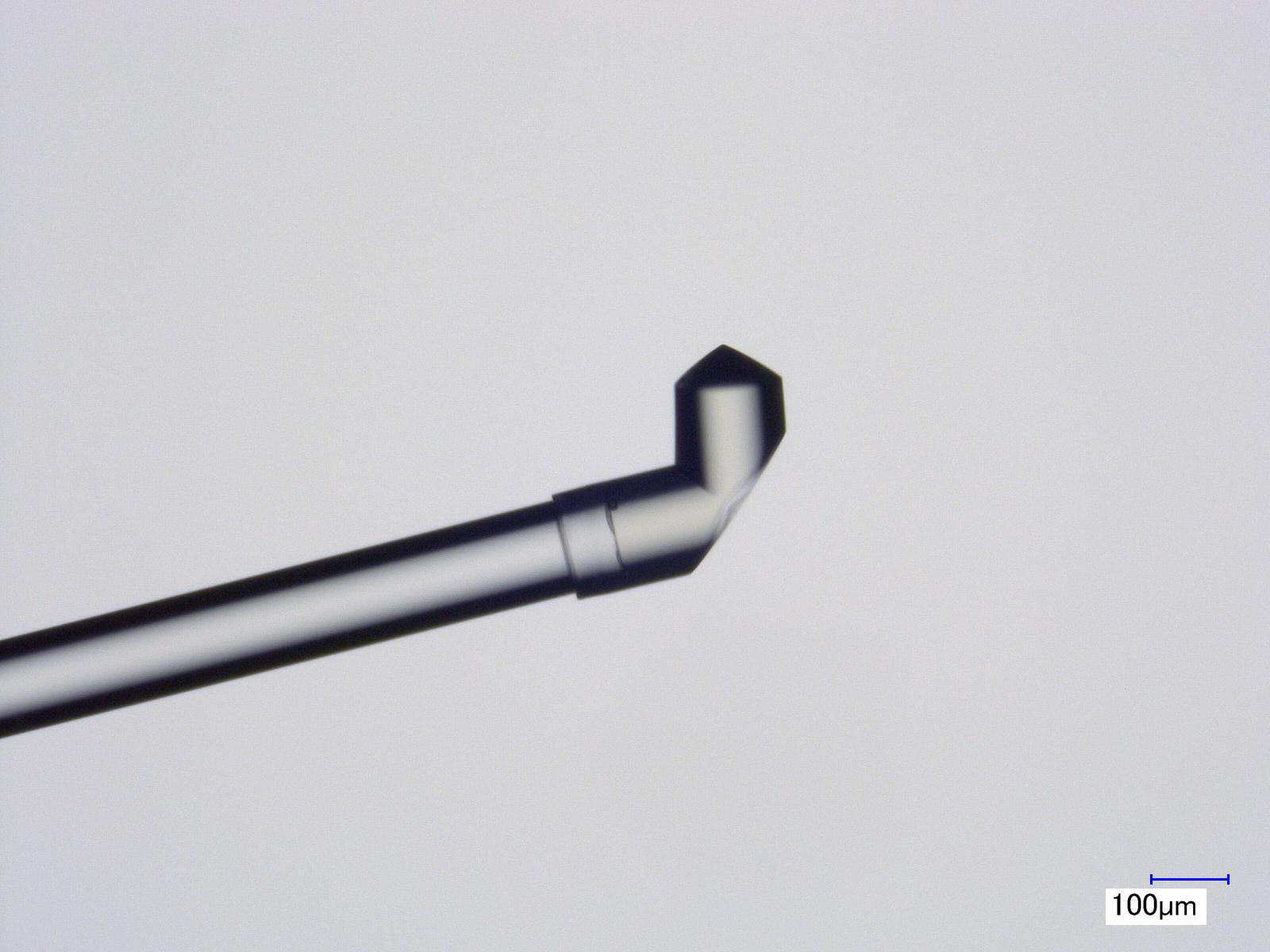
Powerful optical components, perfectly aligned to the fiber mode field
Specifications:
-Size ranges from 100 μm to 4 mm, very short variants possible.
-Optical quality with feature sizes < 1 µm
-Freeform, segmented or diffractive surfaces
-Surface roughness < 10 nm RMS. Shape errors <diameter/1000 PTV
-Custom integration of absorbing structures and encapsulation
-Direct integration of optics into common fiber connectors
-Biocompatible optics
-Direct alignment to fiber mode field with < 1 µm precision
Examples:
• Lensed fibers
• OCT probes
• Fiber-To-PIC coupling lenses
• Mode matching lenses
• Beam shaping
• Chromatic fiber probes -
Optical Arrays
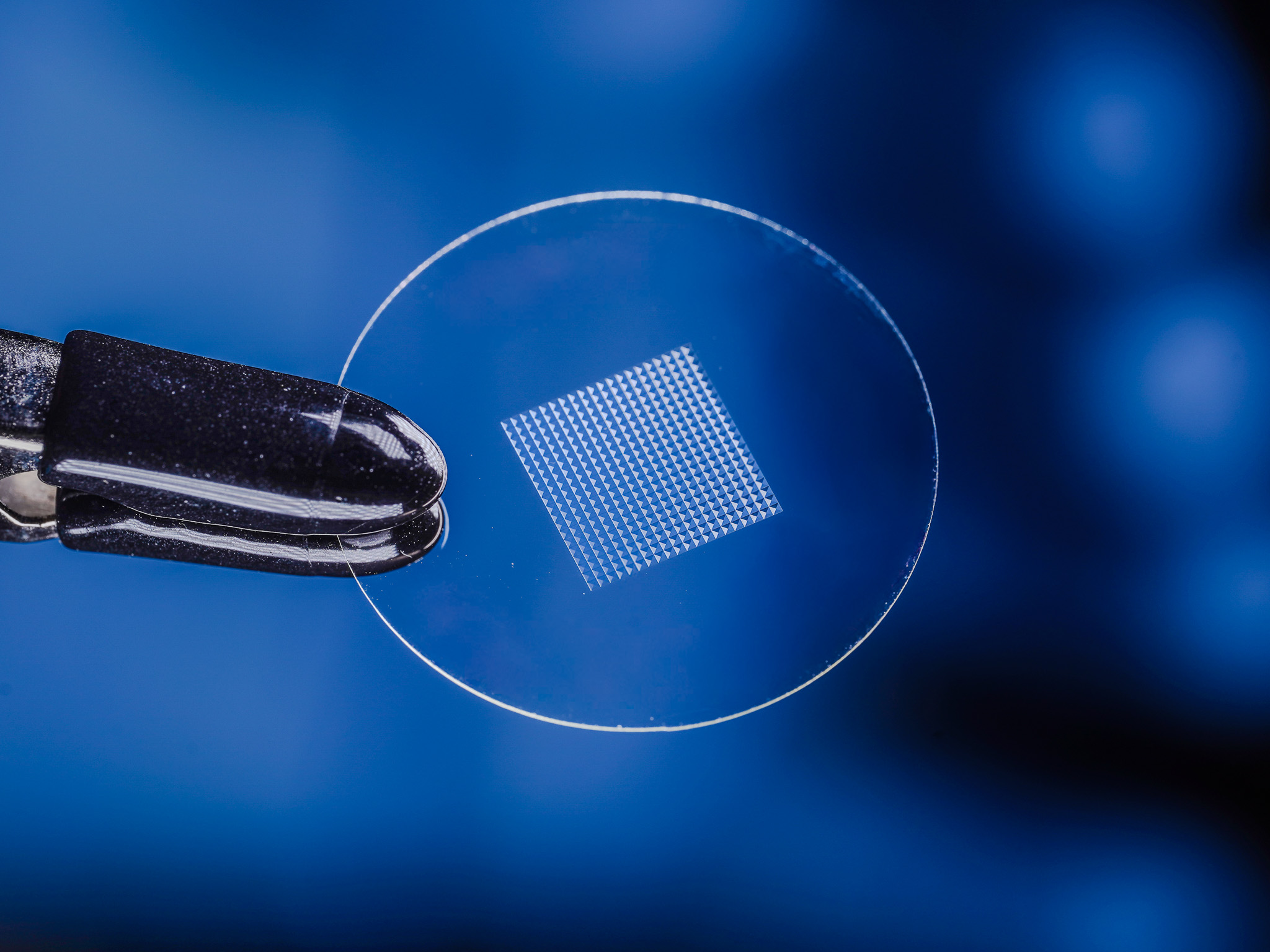
Custom optical arrays:
Fabrication by 3D-Printing allows for almost unlimited design freedom and multiple options for replication.
Specifications:
-Array lateral dimensions from < 100 x 100 µm² to 6″ wafer size
-Lenses or unit cells sized from 3 µm to 2 mm, fill factors up to 100%
-Surface roughness < 10 nm RMS. Shape errors < diameter/1000 PTV
-Element aspect ratios of > 10
-Alignment precision in x, y and z: under 1 µm
-Freeform elements, variable pitch, undercuts, randomised structures.
Examples:
Step & repeat scale-up
Soft stamps
Hard stamps
Micro-displays
Coupling optics
Sensor arrays -
Micro-Optical-Components
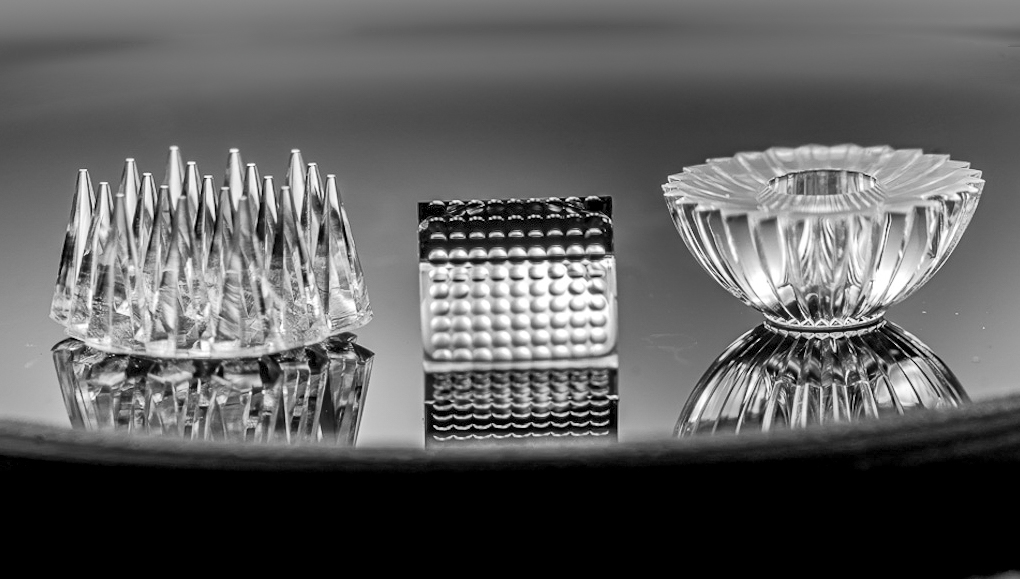
Highly individualized parts
3D-Printing of micro-optical components allows for highly unusual and complex optics
that open up entirely new applications.
Specifications:
-Size ranges: 20 µm to 4.5 mm
-Full freeform surfaces with undercuts are possible
-Surface roughness: less than 10 nm RMS
-Shape errors: less than diameter/1000 PTV
-Alignment-free integration of absorbing structures
-Highly transparent material with low fluorescence
-Biocompatible optics
-Integration of mounting structures with no alignment errors
Examples:
Micro-Optical
Components
• Lenses
• Prisms
• Diffractive parts
• TIR lenses
• Lensed prisms
• Fresnel lenses
• Hybrid components -
Micro Objective Lenses
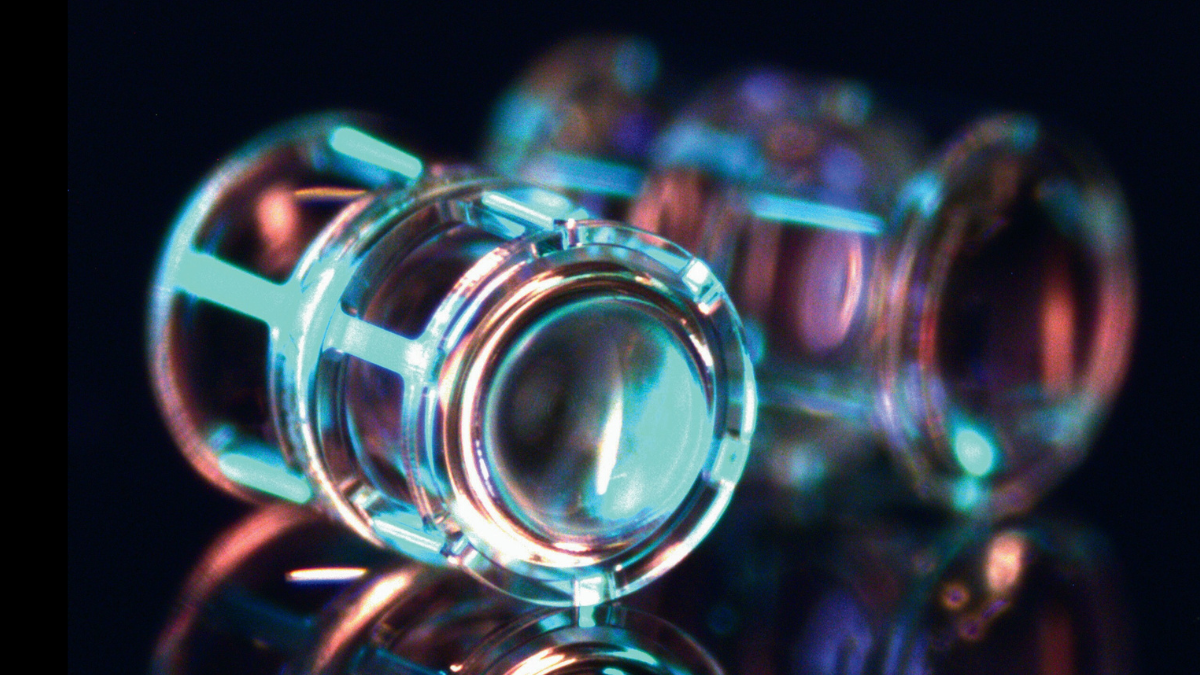
Perfectly aligned all-freeform lens stacks
Specifications:
-Size Ranges: 100 µm to 4 mm, very short variants possible.
-Freeform surfaces that are inherently alignment free.
-Field of view range: 10° – 160°.
-Surface roughness < 10 nm RMS.
-Shape errors: less than diameter/1000 PTV.
-Direct integration of black apertures and baffles.
-Biocompatible polymers that are longterm stable and autoclavable.
-Highly transparent.
-Printing on sensors with < 1 µm alignment precision.
Examples:
• Wide angle objectives
• Distortion free objectives
• Tilted-viewed angle lenses
• Micro tele lenses
• Lenses with integrated sensor
sleeves
• Integrated apertures -
OPTICAL DESIGN & SIMULATION
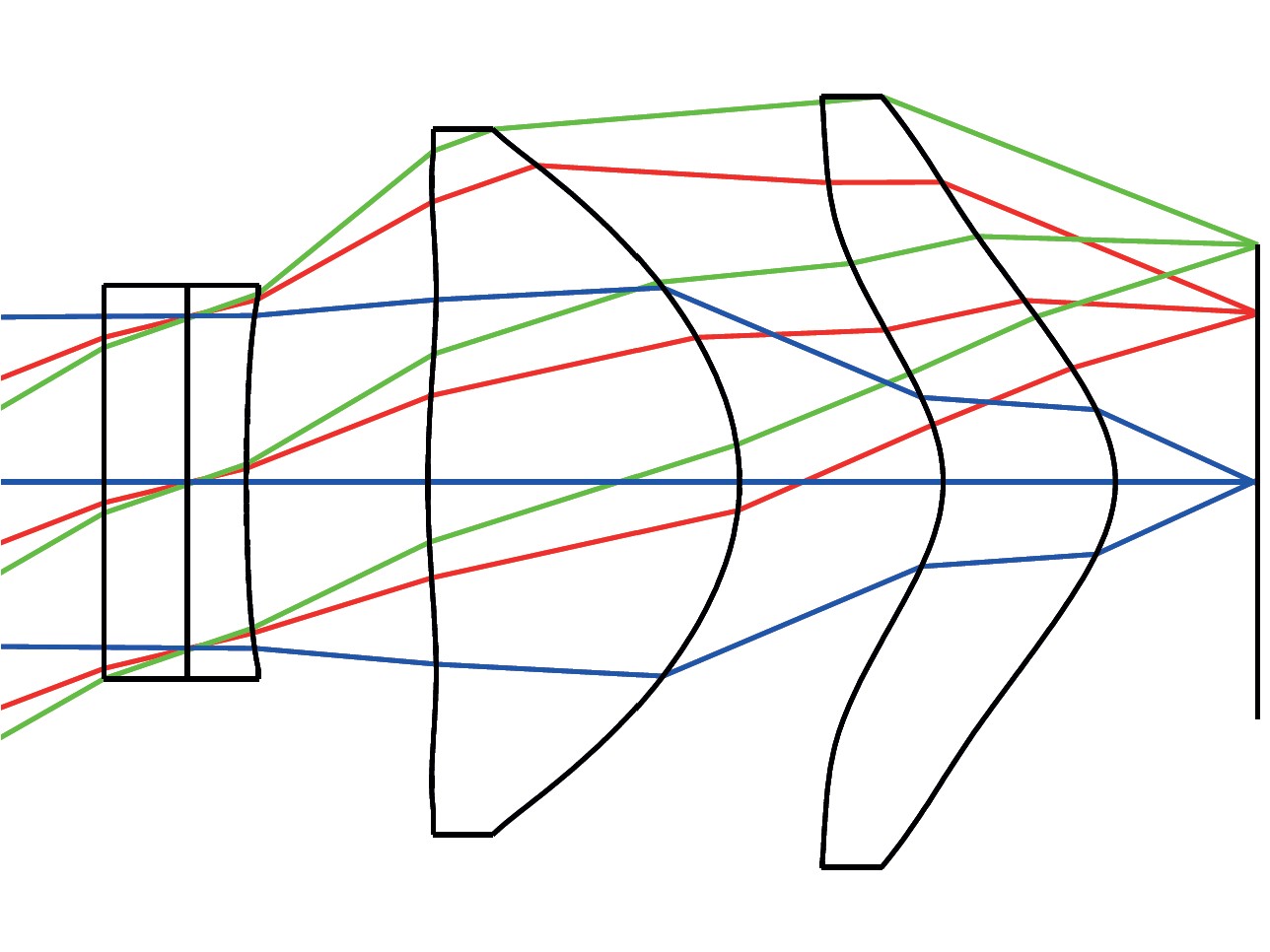
We develop powerful ray-optical and wave-optical designs to reach your most demanding specifications.
Utilizing all modes of light manipulation.
We design complex systems leveraging refraction. diffraction, reflection, absorption, polarization, or any combination of them in hybrid optical systems.
Using the appropriate methods for the problem.
• Sequential or non-sequential raytracing
• Angular spectrum propagation
• Scalar 3D wave propagation
• Rigorous simulation (FDTD, FEM)
Examples:
• TIR concentrator
• Tilted view endoscope lens
• Flat lens / metalens
• Reflective-refractive hybrid lens
• 3D full wave simulation through lens doublet
• Fresnel-TIR hybrid lens -
PTX90-f42 Micro Camera Objective
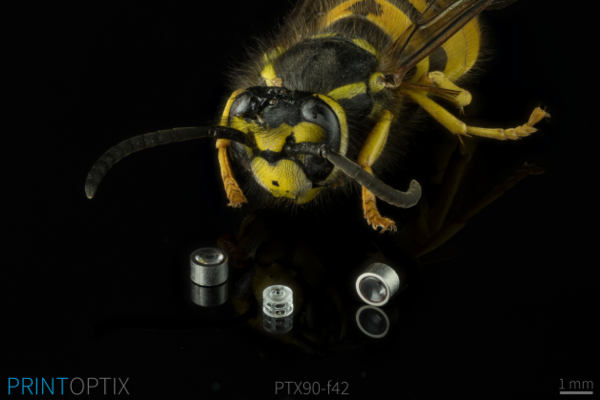
The PTX90-f42 is a micro camera objective with a 90° FOV that is meant to be glued directly onto the cover glass of an imaging sensor. It's encased in a metal casing for mechanical and optical protection and sealed against the environment.
-
Fiber Tip Optics
Powerful optical components, perfectly aligned to the fiber mode field
Specifications:
-Size ranges from 100 μm to 4 mm, very short variants possible.
-Optical quality with feature sizes < 1 µm
-Freeform, segmented or diffractive surfaces
-Surface roughness < 10 nm RMS. Shape errors <diameter/1000 PTV
-Custom integration of absorbing structures and encapsulation
-Direct integration of optics into common fiber connectors
-Biocompatible optics
-Direct alignment to fiber mode field with < 1 µm precision
Examples:
• Lensed fibers
• OCT probes
• Fiber-To-PIC coupling lenses
• Mode matching lenses
• Beam shaping
• Chromatic fiber probes -
Optical Arrays
Custom optical arrays:
Fabrication by 3D-Printing allows for almost unlimited design freedom and multiple options for replication.
Specifications:
-Array lateral dimensions from < 100 x 100 µm² to 6″ wafer size
-Lenses or unit cells sized from 3 µm to 2 mm, fill factors up to 100%
-Surface roughness < 10 nm RMS. Shape errors < diameter/1000 PTV
-Element aspect ratios of > 10
-Alignment precision in x, y and z: under 1 µm
-Freeform elements, variable pitch, undercuts, randomised structures.
Examples:
Step & repeat scale-up
Soft stamps
Hard stamps
Micro-displays
Coupling optics
Sensor arrays -
Micro-Optical-Components
Highly individualized parts
3D-Printing of micro-optical components allows for highly unusual and complex optics
that open up entirely new applications.
Specifications:
-Size ranges: 20 µm to 4.5 mm
-Full freeform surfaces with undercuts are possible
-Surface roughness: less than 10 nm RMS
-Shape errors: less than diameter/1000 PTV
-Alignment-free integration of absorbing structures
-Highly transparent material with low fluorescence
-Biocompatible optics
-Integration of mounting structures with no alignment errors
Examples:
Micro-Optical
Components
• Lenses
• Prisms
• Diffractive parts
• TIR lenses
• Lensed prisms
• Fresnel lenses
• Hybrid components -
Micro Objective Lenses
Perfectly aligned all-freeform lens stacks
Specifications:
-Size Ranges: 100 µm to 4 mm, very short variants possible.
-Freeform surfaces that are inherently alignment free.
-Field of view range: 10° – 160°.
-Surface roughness < 10 nm RMS.
-Shape errors: less than diameter/1000 PTV.
-Direct integration of black apertures and baffles.
-Biocompatible polymers that are longterm stable and autoclavable.
-Highly transparent.
-Printing on sensors with < 1 µm alignment precision.
Examples:
• Wide angle objectives
• Distortion free objectives
• Tilted-viewed angle lenses
• Micro tele lenses
• Lenses with integrated sensor
sleeves
• Integrated apertures -
OPTICAL DESIGN & SIMULATION
We develop powerful ray-optical and wave-optical designs to reach your most demanding specifications.
Utilizing all modes of light manipulation.
We design complex systems leveraging refraction. diffraction, reflection, absorption, polarization, or any combination of them in hybrid optical systems.
Using the appropriate methods for the problem.
• Sequential or non-sequential raytracing
• Angular spectrum propagation
• Scalar 3D wave propagation
• Rigorous simulation (FDTD, FEM)
Examples:
• TIR concentrator
• Tilted view endoscope lens
• Flat lens / metalens
• Reflective-refractive hybrid lens
• 3D full wave simulation through lens doublet
• Fresnel-TIR hybrid lens -
PTX90-f42 Micro Camera Objective
The PTX90-f42 is a micro camera objective with a 90° FOV that is meant to be glued directly onto the cover glass of an imaging sensor. It's encased in a metal casing for mechanical and optical protection and sealed against the environment.
- 住所
- Nobelstrasse 15, Stuttgart, Germany
- ウェブサイトURL
- http://www.printoptix.com
- 担当
- Nils Fahrbach